Friday, June 6, 2014

Completed: On Writing

[Edited to add: I actually finished this post yesterday, but I knew you'd be wrapping things up at work today, so I waited to publish because... it is very long (Sorry!) so I hope you will have some time this weekend to sit down, grab a cup of coffee and read the world's longest book review...]

Dear Jenny,

I burned through this book in January, told you all about it on the phone and then promptly failed to write about it here. Whee. In my defense, the ToB took up a lot of book-ish thinking in Feb and Mar. What? We're halfway through April already in JUNE?! Yeah. I got no excuses.

This book is part memoir, part writing instruction, part publishing advice. The memoir and writing instruction were great.

I am normally loathe to recommend a book when I have not finished it because then I feel guilty if it finishes badly, but when I was halfway through this, I was loving it sooo much that I started gushing about it.

King begins the book reminiscing about his childhood, then focusing on his early writing career and there is some absolutely hilarious content in here.

After that, he moves on to some great advice about writing -- easily digestible stuff that almost anyone could apply immediately to their own writing for improvement.

At this point, this is where I was really shooting my mouth off to everyone who would listen how great this book is! And then... it fell apart.

Things suddenly take a very boring turn. From great advice about writing (useful for everyone), King turns to very specific advice for fiction writers trying to get published. This topic might be interesting (an inside look into the world of publishing? Sure!) but not the way King writes it here. Ugh -- totally yawn worthy.

He then returns to his memoir and offers details about his accident, which is interesting, to some extent (I mean, I'd heard the news -- getting his first-hand account was a unique opportunity) and then he explains that the accident happened as he was writing this book... basically at the very point when the interesting dried up. What a huge bummer.

I'm not quite sure how else he could have handled that -- the accident really took its toll on him, which is completely understandable. So what to do? Just have someone else wrap it up while it was still good? Wait until he had recovered more to continue? (I read Doctor Sleep last year -- his writing chops are definitely back!) Again, I don't know.

Having said all of that, I think the book is totally worth reading, but I also think having this caveat is useful. Be prepared for it to not be so engaging/amusing/charming about 2/3 of the way in. Going in prepared always helps, right?

Ok! The reason it has taken me so long to write this is that I wanted to include a crapload of quotes that either cracked me up or just spoke to me and I've been lazy about getting them down. Ideally, they'd be artfully woven into the review above, but sometime perfectionism is the enemy of done, so I'm just jamming them in down here so I can hit Publish on this sucker.

Generally Hilarious Lines

Here are a collection of lines that just made me laugh out loud...

From the First Foreword, questioning whether or not anyone would want to read a book that he would write on writing:
Colonel Sanders sold a hell of a lot of fried chicken, but I'm not sure anyone wants to know how he made it. [8]
From the Second Foreword:
This is a short book because most books about writing are filled with bullshit. [...] I figured the shorter the book, the less the bullshit. [12]
Reminiscing about a babysitter he had as a kid and how she prepared him for life... in a rather... er... unconventional fashion:
Eula-Beulah prepared me for literary criticism. After having a two-hundred-pound babysitter fart on your face and yell Pow!, The Village Voice holds few terrors. [20]
Love this observation:
I don't want to speak too disparagingly about my generation (actually I do, we had a chance to change the world and opted for the Home Shopping Network instead)... [62]
Recalling the first time he was drunk (on $1.95 whiskey -- blech):
The room is a turntable, I am the spindle, and pretty soon the spindle is going to start tossing its platters. [89]
(Seriously... I spent a lot of time laughing *out loud* while reading this book!)

On Writing

Since the book is called "On Writing," it should be no surprise that he has some great observations on that very topic. This first one is pretty funny:
One of the really bad things you can do to your writing is to dress up the vocabulary, looking for long words because you're maybe a little bit ashamed of your short ones. This is like dressing up a household pet in evening clothes. The pet is embarrassed and the person who committed this act of premeditated cuteness should be even more embarrassed. [117]
One to embrace and remember:
Remember that the basic rule of vocabulary is to use the first word that comes to your mind, if it is appropriate and colorful. If you hesitate and cogitate, you will come up with another word -- of course you will, there's always another word -- but it probably won't be as good as your first one, or as close to what you really mean. [118]
And this just made me laugh:
Grammar is not just a pain in the ass; it's the pole you grab to get your thoughts up on their feet and walking. Besides, all those simple sentences worked for Hemingway, didn't they? Even when he was drunk on his ass, he was a fucking genius. [121]
Regarding the Evils of Passive Voice:
It's weak, it's circuitous, and it's frequently torturous, as well. How about this: "My first kiss will always be recalled by me as how my romance with Shayna was begun." Oh, man -- who farted, right? [123]
He hates adverbs and goes a long way towards backing that opinion. But here's a great soundbite:
Someone out there is now accusing me of being tiresome and anal-retentive. I deny it. I believe the road to hell is paved with adverbs and I will shout it from the rooftops. [125]
(That quote and the surrounding text have made me very sensitive about adverb usage since reading this book, I gotta tell you!)

On Editing

He also has a lot to say about editing -- both self-editing (which is my biggest writing downfall -- look at this epic damned post!) and being edited.

He included a reproduction of the first editorial review he had at his first writing job (he laments that he does not have the original, but says it looked something like this):

He goes on to say he learned more in 10 minutes from that editor's markup than in his two years of English Lit in college:
When he finished marking my copy in the manner indicated above, he looked up and saw something on my face. I think he must have mistaken it for horror. It wasn't; it was pure revelation. Why, I wondered, didn't English teachers ever do this? [57]
The editor then says he "only took out the bad parts [...] most of it is pretty good" and goes on to say:
When you write a story, you're telling yourself the story [...] When you rewrite, your main job is taking out all the things that are not the story. [57] 
Such a great piece of editing advice! And I need to write this next one on a Post-it note:
Formula: 2nd Draft = 1st Draft - 10% [222]
(Believe it or not, I have actually removed 10% of this very post in the past 24 hours!)

On Reading 

He talks a lot about how writers must also be readers. The following quotes made me think, "Stephen King and I are twins!" (Well, except that he's a phenomenally successful bestselling writer and I'm... struggling to get posts up on this reading blog I keep with my best friend... but whatevs.)
I'm a slow reader, but I usually get through seventy or eighty books a year, mostly fiction. [145]
Me, too! High five, Stephen King! He also talks about finding time to read...
There's always the treadmill, or whatever you use down at the local health club to get aerobic. I try to spend an hour doing that every day, and I think I'd go mad without a good novel to keep me company. [148]
Me, too! Gosh, Jenny, if you and I weren't already besties, I might have to go over to Stephen's house. HA.

Comedic Observations on Alcoholism

Never thought I'd type that sentence in my life, but there it was. A lot of the book deals with his battle with alcoholism and substance abuse (in fact, he claims that he doesn't remember writing Cujo at all, because he was so wasted). Here's a truth, told in a funny way:
Telling an alcoholic to control his drinking is like telling a guy suffering the world's most cataclysmic case of diarrhea to control his shitting [95]
This one also made me laugh (and cringe):
A year or so before, observing the rapidity with which huge bottles of Listerine were disappearing from the bathroom, Tabby asked me if I drank the stuff. I responded with self-righteous hauteur that I most certainly did not. Nor did I. I drank the Scope instead. It was tastier, had that hint of mint. [97]

In Conclusion...

This isn't really a conclusion, but I'm concluding this post with this final quote, so I'm calling in the Conclusion!

It's bagging on writers' workshops (not all of them, but certain ones...) Forgive me -- this is a long passage. But take a moment and read through it, because 1. As both a teacher and a student, I think you'll be able to appreciate some of this and 2. Reading it all makes his final angry line all the more epic (I laughed right out loud. On a plane.)
And what about these critiques, by the way? How valuable are they? Not very, in my experience, sorry. A lot of them are maddeningly vague. I love the feeling of Peter's story,  someone may say.  It had something... a sense of I don't know.... there's a loving kind of you know... I can't exactly describe it...
Other writing-seminar gemmies include I felt like the tone thing was kind of you know; The character of Polly seemed pretty much stereotypical; I loved the imagery because I could see what he was talking about more or less perfectly.
And instead of pelting these babbling idiots with their own freshly toasted marshmallows, everyone else sitting around the fire is often nodding and smiling and looking solemnly thoughtful.  In too many cases the teachers and writers in residence are nodding, smiling, and looking solemnly thoughtful right along with them.
It seems to occur to few of the attendees that if you have a feeling you just can't describe, you might just be, I don't know, kind of like, my sense of it is, maybe in the wrong fucking class. [233]

Whew! Believe it or not, I deleted 10 other quotes from this post that I had also bookmarked! So even with my whole, "Only 2/3 of this book was good" disclaimer at the top... that 2/3 was really damned good.

And I am... DONE.

love,
kelly

Tuesday, June 3, 2014

2014: Kelly's Status Report (June)

Dear Jenny,

What the ever-loving heck?! I managed to keep on top of this TBR business for three years running (okay, I did have some harrowing end-of-the-year page counting marathons there, BUT... not until the end!) and then this year... it's all fallen apart.

Since I feel like I keep getting further and further behind, I thought I'd write a little Status post and maybe, just maybe, get back on track?!

Book 1.14: On Writing

I actually wrote a preview post for this book and I am done reading it!

But I had soooo much to say about it that my post keeps getting longer and longer, I get bogged down, and then I abandon it. Maybe after I finish this post, I'll finish that one. We'll see.

Status: Completed book. Half completed blog post.

Book 2.14: Detroit City is the Place to Be

Oh, come ON! I also wrote a preview post for that one and didn't even remember writing it! (Although, re-reading it, I do remember our lengthy discussion on the colloquialism "party store" in the greater Detroit area...)

I enjoyed the first part, but then got bogged down in some heavy-duty history (which I don't really enjoy at the best of times, but given *all* of the Detroit history I have read in the past two years, I just didn't need any more). However, it was starting to pick up and then... I don't know. I got distracted.

Status:  Halfway through book.

Book 3.14: Cry, the Beloved Country

Surprise! I'm even out of "preview posts" at this point in the stack. Sooo... I guess this post can serve as one, right? This book was pressed into my hand a couple of years ago at a used bookstore by our friend Stuart who said, "You MUST read this. It's SO good." So I bought it. (Note the sunset-and-acacia tree treatment over there... although the publication date on this book was pre-Lion King. So this issue goes back further than that.)

About a quarter of the way into this book, I texted Stuart and said, "I'm gonna take a stab here... this doesn't suddenly get a lot happier, right?" He replied, "Nope." And... it didn't. I had a lot of thoughts about this book when I read it and I probably should have written my post then. I hope my notes and post-its are enough to refresh me. Cause...

Status: Book is DONE. Need to write blog post.

Book 4.14: Presumed Innocent

Yet another no-preview-yet-I'm-done puppy over here. This book had the distinction of being, by far, the longest book to ever sit on my TBR pile. A friend gave it to me in... 1996. Seriously. I don't even know why I kept it all that time, but at some point, it turned into, "As God as my witness, I WILL read this book!" So I finally did it. Now I just need to tell you about it.

Status: Completed book. Need to write blog post. (Sensing a theme here...) (Glad I am writing this post...)

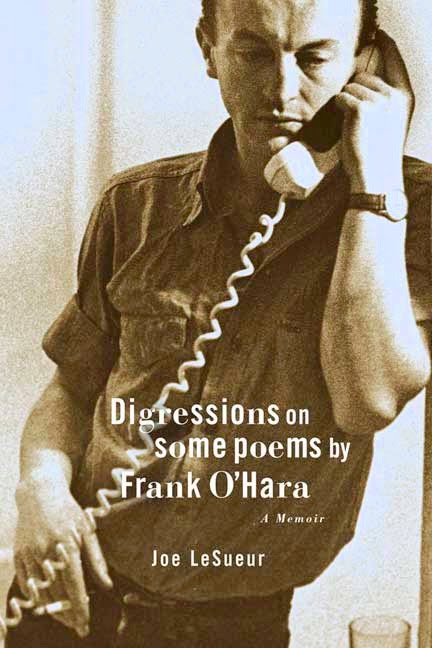
Book 5.14: Digressions on Some Poems By Frank O'Hara: A Memoir

I bought this book on my second date with Bill -- after dinner at the House of Nanking (have you ever been there? Hilarious [and somewhat frightening] "Soup Nazi"-style service, but the food is amazing), we went to City Lights and I found this book, which had just been released. In 2003. So I've had it for awhile. I've always loved Frank O'Hara's poetry, so I was interested to learn more about him (apparently not that  interested, as it has sat on my TBR shelf for almost 11 years, but... well, you know.)

I just started reading it a couple of weeks ago and am LOVING it so far. Which makes me wonder... why the hell haven't I finished it and written about it? Oh, because I fell into a Buffy shaped hole -- my library has the Buffy the Vampire Slayer comic books and I have just burned through Seasons 8 and 9. If you have access to these, I recommend them -- you can totally hear the characters talking, which is awesome. (Although... Season 8 gets squinchy weird in the end... but I can overlook it because... Scoobies!)

Status: Just started the book.

Book 6.14: ?

Yup. It's technically June, so I should have a Book 6 chosen. But look at this list! I'm so far behind! So I'll work on these first five and try to determine what my quickest read on the list would be... maybe On Being Brown: What It Means to Be a Cleveland Browns Fan? Perhaps topical with all of the recent "Johnny Football" talk. Or...something. I dunno.

Status: Need to pick a book!

Overall Status

Here's where I stand... it's June, so I should be halfway through reading and writing about my list by the end of this month. That's six books.
  • Completed books awaiting blog posts:3
  • Books awaiting completion *and* blog posts: 2
  • Books I need to actually choose and get started on: 1
Well... that's not sooo bad, right? Hrm. Time to get hustling over here!

How you doin?

love,
kelly

Monday, May 5, 2014

Completed: How Fiction Works

Kelly,

Have you ever had it happen that an unfortunate  (or fortunate) juxtaposition of reading material illuminates something interesting in a book?

In this case, I read this blog entry by Junot Diaz at the New Yorker, called MFA vs. POC. Diaz discusses just how unrelentingly *white* his experience was, and how the whole process grinds down men and women of color. You should read it if you haven't already.

A few days later, I picked up How Fiction Works. As you know, I had a moment of panic about only having read 2 books. Since I had started this one a few months ago, and it's pretty short, only about 200 pages, I figured it would be something I could knock off the list. It helps that I got stuck in the car dealership for a few hours on Saturday morning.

Here's the problem. I've got Junot Diaz in my brain, and it doesn't take me long to notice that every.single.author that Wood is discussing is a white man. At some point, it actually became comical. You're going to write a 200 page discussion about how fiction works, and every single example is a white guy? Come on!

By the way,  lest it seems I am exaggerating, I counted. Wood mentions or discusses 68 authors. Of those,  59 are men and 9 are women (and one of those is him reading Beatrix Potter to his daughter. I wish I was fucking kidding).  He discusses: 1 black author (Ralph Ellison); a few British authors that are ethnically non-white (VS Naipaul is from Trinidad, or Kazuo Ishiguro, who is Japanese);  one Latin American author, Roberto Bolano (Chile); and a few dudes from other European countries.

I mean, really? Honestly, it was so amazing that I started to marvel at the chuzpah of the entire enterprise.

As for the actual book. It was fine. It's organized into mini-chapters, some lasting only a paragraph, and none more than a few pages. Those chapters are loosely organized into bigger umbrella categories, such as narration, characters, language, etc.

Wood is a compelling writer himself, and he does nice work illustrating the power of the close read. When I read books like this, it's because I think it keeps me sharp as a teacher. Even though I teach 7th graders, I still find myself using a lot of what I  know to lay the path for their future as readers. Given that, there was one line that made me laugh out loud, "You have only to teach literature to realize that most young readers are poor noticers" (63). Heh. And I'm pretty sure he's talking about college kids! But, it is true, the things that seem so interesting and meaty in a text are the very things that kids are most likely to miss. They don't really attend to the details at all. I often point out that to kids, reading means something like I ran my eyes over all the words on the pages. I READ it. Only it is so apparent how much they miss. They are just learning about close reading, but it's all teacher-directed: HERE. LOOK AT THIS! I'm the Mama Bird, feeding them close-reading. It's actually kind of fun, but it is also difficult. You can see that some kids just get it, while others are going to need a few more years.

Anyways. I think the myopic look at literature presented in How Fiction Words would have become apparent either way; yet, it was still painful to see Diaz's point "In my workshop the default subject position of reading and writing—of Literature with a capital L—was white, straight and male" proven so ruthlessly. 

Jenny


Friday, May 2, 2014

Completed: A Problem From Hell

Kelly, 

I actually read this book a few months ago (time flies when you're incredibly busy), but haven't had a chance to write about it yet.

As you know, this was another of my depressing genocide reads. The best part about it was that I read it with my friend Marjorie on a reading schedule, and then we discussed in on Facebook. Because I'm lazy, I'm going to excerpt my major points here: 


1) The first time I tried this, I didn't make it any further than the first chapter, but I put it down after the prologue. There's something about the framing of it----despite the title, so I should have known better!---that I just found myself sort of annoyed by. I mean, I get it, we're Americans, the worlds policemen, yada yada...but clearly we actually don't do that great of a job of policing the world. So when she ends that prologue by talking about how genocide elsewhere is a product of American foreign policy failures, it just sat with me the wrong way. I would like to talk more about this. I don't necessarily think that I am a knee-jerk isolationist, but maybe I am!?! Why are we always the ones responsible for intervening? 

However, this time around, I pushed through and read more. The initial chapters were about a man named Lemkin who made it his life's work to pass international laws about genocide. I found his story quite interesting and ended up admiring, for the most part, his fortitude and insistence that something had to be done. It was hard to read. He was fighting all alone, and it was such an impossible task to be the lone voice in the wilderness. What an inspiring and ultimately tragic figure. 

In general, the whole first part, about the role of international law, and what it can and can't do was super interesting, which I didn't expect. After those chapters about the history of the UN treaty, the book shifts to a one-chapter-per-genocide model, covering Cambodia, Iraq, Rwanda, and Bosnia. Those chapters were interesting and depressing. I learned more about each conflict, but the whole thesis, that American foreign policy was slow to respond, was sort of difficult. Yes, we knew what was happening and did very little to solve it, until Kosovo, when we flew air strikes that helped stop the killings. 

But...it just was a weird take. Maybe because I didn't know enough, but it felt like sort of strange. The closest I can get to describing it would be this: a few years ago, a book came out that was about the American Civil War, but it was about how the British Empire responded and reacted to the war. I mean, that's pretty abstruse, right? You'd need to already know A LOT about the Civil War and ALSO about the British Empire in order to have a book like that make sense. And this book had the same feeling. I had the feeling while reading it that America was to blame for genocide in these countries, but that's patently ridiculous and honestly also full of hubris. How can it be that American foreign policy is to blame for bad shit happening *all over the world*? 

This book was a struggle. 
 
If you're remember, I also read Philip Gourevitch book about Rwanda, which I reviewed here. There was something in that book that really stuck with me, which I'll quote here, too: "Just as the state's police swear to prevent and punish murder, so the signers of the Genocide Convention swore to police a brave new world order...The authors and signers of the Genocide Convention knew perfectly well that they had not fought WWII to stop the Holocaust but rather...to contain fascist aggression. What made those victorious powers, which dominated the UN then even more than they do now, imagine they would act differently in the future?" (149).

As I read A Problem From Hell, I have found myself thinking of this idea time and time again. It's easy to say "never again" but the political will to actually stop genocide is missing. It was frustrating because in some chapters, she'd mention things the US could have done, but later, when they are tried, they almost never work! My take away was perhaps not what it should have been. I think it's supposed to be a call to action: we can make it better! But what I actually took away from it was something more like: complicated shit stays complicated no matter what we do. 

Jenny

PS. I'm having a moment of panic. It's MAY and I've only read 2 of my books (and abandoned a third). I need to get to it! I'm going to start reading one of these other ones right now. Maybe How Fiction Works, which I started a few weeks months ago and put down. 

Sunday, March 2, 2014

Bracketology

Kelly,

Tomorrow is the big day! I have finished 12 of the 17, which isn't so bad. I also spent some time today filling out my brackets, mostly to enter into Kerry's ToB pool over at his blog, Hungry like the Woolf. 


It's always so tricky, the brackets. I used to do brackets for who I thought *would* win, but that was sort of boring. Now, I have a weird hybrid method. I always pick who I *want* to win in the first round; then, I try to be more pragmatic about who *would* win in later match-ups. Ultimately, this is probably the worst strategy, but I'm sticking with it.

Did you vote for a Zombie? I chose Long Division. I'd have to say that at this point, Long Division and A Tale for the Time Being are probably my favorites. I'm hoping to read The Son before it's first round match up on March 13. Then, I'll see which books advance into the further rounds. Of the remaining books that I have yet to read, I'm most interested in The Luminaries. 

I think the best news so far is that of all the first round match-ups, I have read at least one of the books. However, there also means there are only a few where I've read both of the first round books.

I'm excited for tomorrow!
Jenny

Sunday, February 16, 2014

Kelly's Book 2.14: Detroit City is the Place to Be

Dear Jenny,

I'm still one post behind -- I have finished reading On Writing but I haven't written about it yet -- but I've just started this book, so I thought I would write the preview. I'm a wild woman, you know... I mix it up. (Also, maybe lazy... it's easier to write these preview posts than the re-caps.)

I think you recommended this book to me... I don't think that you had read it, but that you had read about it. And I bought it with our TBR winnings last year. So that's fun!

So far I have enjoyed some of the Detroit "insider knowledge" that makes me feel like an insider for already having it. For instance, Detroiters take a certain civic pride in knowing that there is, in fact, no place called "South Detroit" as referenced in Journey's song, "Don't Stop Believing." [2] (South Detroit? That would be Windsor.) And the term "party store" is explained in a footnote as "Our term for liquor stores in metropolitan Detroit" [23]. (I had not heard that term until I met Bill, but have since found that everyone here says it -- I always thought a "party store" was a place to buy buy streamers and balloons, but Detroiters know what *really* makes a party.) (Yup... It's booze.)

I have lived in the Detroit area for almost two years (time flies, eh?) and honestly have no idea how the city could pull itself out of its mess, but this author claims he's going to look beyond what's gone wrong (a common topic for books and articles) and shine a light on how the future could be better. I look forward to reading that. And, of course, I'll keep ya posted.

love,
kelly

Saturday, February 8, 2014

Jenny's book 2.14: A Problem From Hell: America and the Age of Genocide

Kelly,

A quick ToB X update before I talk about my February book. I'm feeling pretty good about my progress so far. I have read 10 so far and have started another, The People in the Trees. I am hoping to finish that and at least one of the longer ones before the official start of the tournament in March. I was making pretty good progress and moving a lot of the shorter books off the decks, but now I have several of the longer ones left. My grad school class has geared up, and I ended up doing a lot of work for that last week. Either way, not a bad place to be a few weeks before we even start. I'm happy.

Of course, then I realized, I still have to make some time for my February book. It seemed like a good idea to have a non-fiction read for this month with all the other novels I've been working on, but I put less non-fiction titles on my list this year, too. They tend to be longer and more demanding, and I wanted to make sure I had a manageable list with all that's going on this year.

Here's where the serendipitous nature of the internet comes in. One of my old friends from California, Marjorie, retired from our school in Oakland and moved back to Michigan. At some point, we found each other on Facebook. I've been to see her once (it's on the way to your house, actually!) because it's right over the border into Michigan and only about 90 minutes away. Heck! I've driven 90 minutes and not left the Chicago city limits, why not take a quick jaunt to Michigan? I need to do that again one day. Anyways, Marjorie is a former history teacher and counselor. At one point, she posted a Goodreads list that said she wanted to list one of my TBR books, A Problem from Hell: America in the Age of Genocide by Samantha Power. My strange fascination with the terrible things people do to each other continues.

 I asked Marjorie if now was a good time for her to read it, and now we're reading it together. We set up a reading schedule and will discuss it on Facebook every week. This is a good plan for me for a couple of reasons. Obviously, having a schedule and a time to talk about the books is appealing. It's a pretty manageable bite, about 125 pages a week for four weeks. More importantly, I think it will be great to talk about it with a history teacher. I bet she will have some illuminating ideas about the book and the historical context.

I'll get back to you on A Problem from Hell in early March, but if you want you can also read our discussion on FB as we go along. Originally, we talked about a Wednesday discussion day, but we are a little late this week and so my first post just went live this morning.

How's your TBR pile doing so far in 2014?
Jenny